The Role of Self-Maintaining Materials in Autonomous Vehicle Interiors
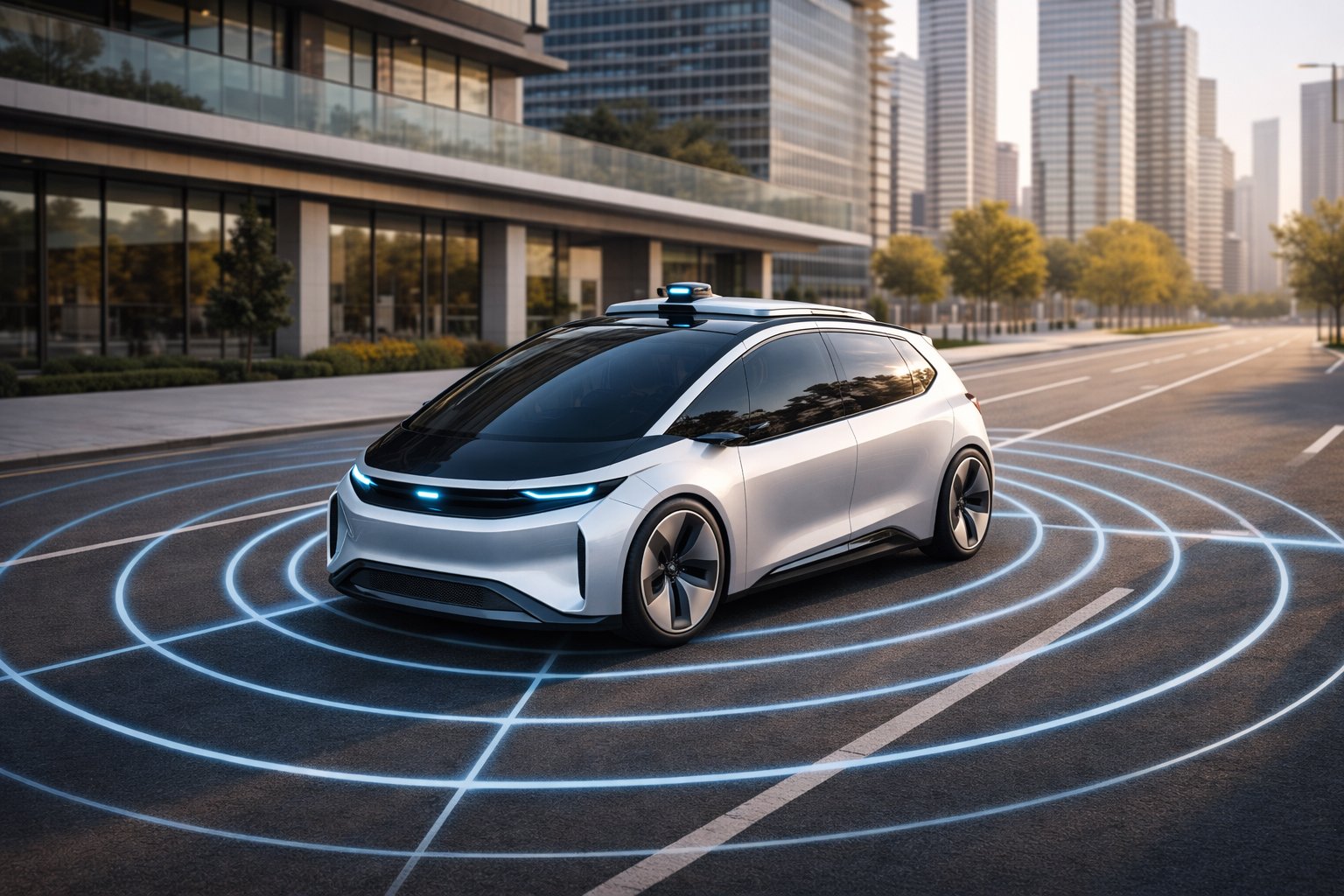
Autonomous vehicles are often framed as a revolution in sensing, compute, and safety. But as autonomy transitions from demonstrations to real-world fleets, the interior becomes a critical determinant of commercial viability and passenger acceptance. In shared-use autonomous mobility (robotaxis, autonomous shuttles, and fleet-managed pods) the interior is not a private personal space; it is a high-turnover, high-contact environment that must perform under sustained use with limited downtime.
This creates a new requirement that traditional automotive interiors were not designed to meet: the cabin must remain consistently acceptable between cleaning cycles. Not merely “clean after cleaning,” but stable in odour, appearance, and perceived hygiene across repeated passenger turnover. The result is growing interest in self-maintaining materials: material systems engineered to resist microbial growth, staining, odour development, and early-stage degradation through intrinsic performance rather than constant intervention.
Self-maintaining is not a promise of “no cleaning.” It is a materials-led strategy to reduce performance drift, where surfaces gradually look worse, smell worse, and feel less trustworthy between maintenance events.
Defining Self-Maintaining Materials in Practical Terms
In the context of autonomous vehicle interiors, self-maintaining materials can be defined as those that help maintain functional and aesthetic performance through three overlapping mechanisms:
Contamination resistance
Materials that reduce retention of soils, oils, and residues, limiting how easily contamination adheres, spreads, or becomes embedded.Biological growth control
Materials that inhibit microbial growth on or within surfaces, reducing the likelihood of biofilm formation and the secondary effects that follow (odour, staining, tackiness, material breakdown).Degradation resistance
Materials that better withstand abrasion, sweat chemistry, humidity cycling, and repeated cleaning, preserving texture, colour, and mechanical integrity over time.
A self-maintaining interior typically combines all three. A surface that is antimicrobial but easily scratched will still degrade visually. A surface that wipes clean easily but allows microbial growth may still develop odours. A surface that looks pristine but becomes sticky or discolours after repeated cleaning fails in fleet reality.
Why Autonomous Fleet Interiors Are a Different Materials Problem
Shared autonomous interiors face a distinct operating profile compared with privately owned vehicles:
Higher “touch density”: far more unique users per day, each contributing skin oils, sweat, and microbiome transfer
Higher “use intensity”: frequent entries/exits increase abrasion, scuffing, and particulate load
Variable hygiene behaviours: occupants may eat, drink, cough, sneeze, and leave residues
Limited dwell time for cleaning: fleets optimise uptime, so cleaning windows are compressed
Cleaning variability: different depots, staff, and protocols create inconsistent chemical exposure
This environment changes what matters. The most important interior material attributes become those that reduce volatility: surfaces should not quickly develop odour, visible grime, or tackiness; they should not deteriorate rapidly under frequent wipe-down; and they should remain psychologically “safe” in the eyes of passengers.
The Microbial Reality is More Than Germs, It’s the Secondary Effects
When the topic of microbes in interiors comes up, attention often focuses on infection risk. In practice, for vehicle interiors the more immediate and persistent challenge is the secondary effects of microbial growth:
Odour generation: microbial metabolism of sweat residues, skin oils, and trapped organics can produce unpleasant volatile compounds
Staining and discolouration: microbial by-products and biofilms can create visible marks, particularly in porous or textured materials
Surface feel changes: biofilms and residue layers can shift a surface from “dry and clean” to “sticky and unpleasant”
Material degradation: certain microorganisms and enzymes can contribute to polymer additive depletion, plasticiser migration changes, or accelerated breakdown in specific material systems
Increased cleaning aggressiveness: once odour and staining appear, operators tend to escalate chemicals and abrasion, accelerating wear
In autonomous fleets, these effects translate directly into operational cost and brand perception. A vehicle that smells “used” or appears degraded is a vehicle passengers avoid, regardless of its driving performance.
Antimicrobial Technology as an Enabler of Self-Maintaining Design
Antimicrobial technology integrated into interior materials can provide continuous, passive control of microbial growth, supporting cleanliness stability between cleaning cycles. The relevance is not that it replaces cleaning, but that it reduces microbial amplification of contamination, especially in warm, intermittently humid cabin conditions.
When deployed thoughtfully, antimicrobial solutions can contribute to:
Lower microbial growth on high-touch surfaces and soft components
Reduced odour formation associated with bacterial activity
Reduced risk of biofilm development in micro-textures and seams
More stable perceived cleanliness, particularly in shared environments
A key design principle is integration. Antimicrobial performance tends to be more durable when designed into the material system during manufacture rather than relying on short-lived surface treatments, especially where abrasion, repeated wiping, and physical contact are frequent.
Where Self-Maintaining Performance Is Won or Lost
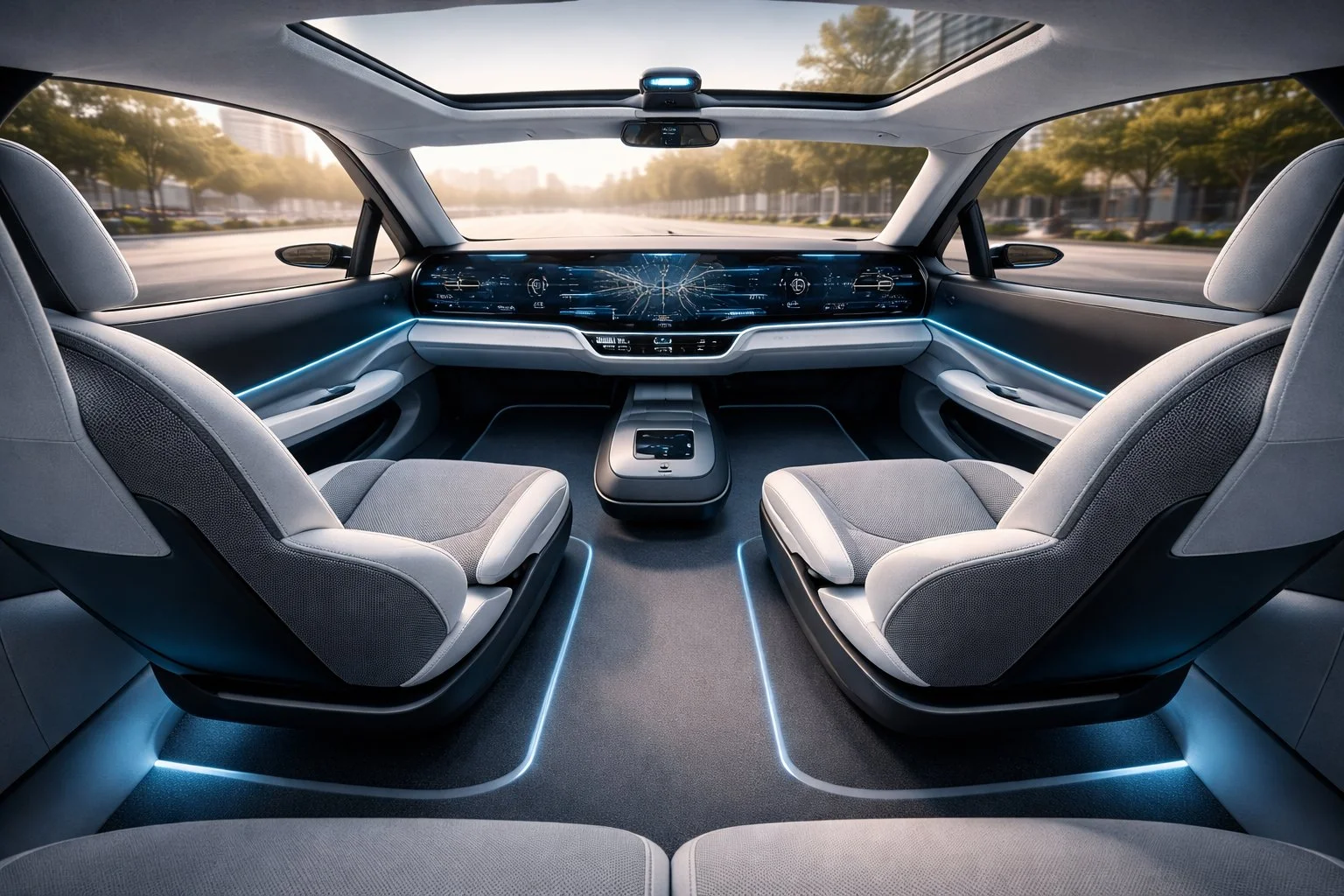
Autonomous interiors are multi-material systems. “Self-maintaining” is rarely delivered by one technology; it is achieved through coordinated choices across polymers, textiles, coatings, and assembly design.
Seating surfaces and upholstery (textiles, synthetic leathers, coated fabrics)
These are high-contact, high-residue surfaces where sweat chemistry, abrasion, and cleaning exposure are constant. Key risks include odour build-up, staining, and texture breakdown. For self-maintaining performance, relevant levers include fibre selection, coating architecture, antimicrobial integration strategy, and soil-release characteristics.
Foams and underlayers
While not always directly touched, foams can act as reservoirs for moisture and organics, influencing long-term odour. Material design should consider vapour management, antimicrobial integration where appropriate, and barrier layers that prevent ingress from the surface.
Hard plastics and interior trim (PP, ABS, PC/ABS, TPU, TPE, PA)
Door pulls, armrests, belt buckles, switch surrounds, and console features are frequent contact points. These surfaces must resist micro-scratching (which increases soil retention), withstand disinfectant wipes, and maintain tactility. Antimicrobial additives may support odour control and microbial stability, but must be specified in a way that does not compromise mechanical performance or aesthetics.
Touch surfaces and HMI components (screens, coatings, capacitive layers)
Displays and glossy surfaces are psychologically important—fingerprints and haze read as “dirty.” The self-maintaining approach here often involves a combination of oleophobicity, scratch resistance, and cleaning durability. Antimicrobial integration may be possible in surrounding bezels, coatings, or polymers, but the performance claim should be carefully framed and validated for the specific stack.
Flooring systems (TPO, PVC, rubber blends, composites)
Flooring experiences abrasion, grit, moisture, and organic soils from footwear. It also directly influences odour. Self-maintaining flooring relies on wear-layer engineering, ease of cleaning, and resistance to microbial growth in micro-textures and seams.
Coatings, paints, and soft-touch finishes
Soft-touch coatings can be vulnerable to tackiness, shine changes, and chemical attack, especially in fleets. If antimicrobial coatings are used, long-term durability under repeated wiping and abrasion must be proven, not assumed. In some cases, a harder topcoat with soil-release properties may deliver better real-world maintenance performance than a purely “pleasant” tactile finish.
Adhesives, sealants, seams, and assembly interfaces
Microbial growth and odour issues often originate not on the open surface but in seams, stitching, overlaps, and hidden interfaces where moisture and organics accumulate. Designing for self-maintenance means reducing trap geometries, improving drainage and dry-out, and selecting materials that perform in these micro-environments.
Designing for Cleanability and Why Geometry Matters as Much as Chemistry
A material can be easy to clean on a flat test panel and still fail in a real interior due to geometry. Autonomous interiors should be designed with cleanability as an engineering requirement:
Minimise crevices, deep textures, and trap points where residues accumulate
Reduce stitch lines and seams in high-contact zones or move them away from touch hotspots
Design surfaces for fast wipe paths (cleaning staff time is limited)
Specify texture that hides minor scuffs without increasing soil retention
Ensure compatibility with fast-drying cleaning protocols to reduce humidity persistence
Self-maintaining interiors come from combining material selection with design-for-maintenance principles.
Cleaning Chemistry Compatibility and The Unseen Failure Mode
Fleet interiors are frequently cleaned with alcohol-based wipes, quaternary ammonium compounds, chlorine-releasing agents, hydrogen peroxide systems, and surfactant blends. Even when individual products are “interior safe,” repeated exposure changes polymers and coatings over time.
Therefore, self-maintaining material specification should include:
Chemical resistance under repeated cycles (not one-off exposure)
Colour stability and gloss retention after cleaning
Resistance to tackiness, whitening, and micro-cracking
Abrasion resistance under “wipe + grit” conditions
This is where antimicrobial and protective technologies must be assessed in the real context: any hygiene benefit is undermined if the surface becomes hazy, sticky, or visually worn after 3–6 months of fleet cleaning.
A Practical Specification Framework for Autonomous Interiors
A useful way to translate “self-maintaining” into specification language is to define a performance bundle:
Hygiene stability
Control of microbial growth on relevant surfaces (validated to appropriate standards)
Odour reduction strategy (materials + design + maintenance protocols)
Appearance stability
Stain resistance and soil-release
Scuff and abrasion resistance
Gloss/texture stability under repeated contact and wiping
Maintenance compatibility
Demonstrated resistance to the operator’s real cleaning agents
Proven performance after repeated cleaning cycles
Durability and lifecycle performance
Retention of mechanical properties and surface feel
Reduced component replacement frequency in high-use zones
Passenger perception
Consistent visual cleanliness (no haze, no tackiness, no rapid “shine-up”)
Reduced odour and reduced “used vehicle” cues
How to Prove Self-Maintaining Claims Without Overreach
Because “self-cleaning” can be interpreted as “no cleaning required,” it is safer and more credible to position the concept as self-maintaining performance supported by validation.
A robust validation approach often combines:
Antimicrobial efficacy testing to recognised standards relevant to the material type
Abrasion and scrub testing before and after antimicrobial evaluation
Chemical resistance testing using the fleet’s real cleaning agents and cycle counts
Simulated soiling and soil-release tests (skin oil analogues, particulate grime)
Odour assessment protocols (where feasible), particularly for textiles and foams
Real-world pilot trials in a small fleet subset with scheduled inspections
For thought leadership audiences, the key message is that autonomous interiors require multi-factor validation, antimicrobial performance is important, but it must survive abrasion and cleaning, and it must deliver perceptible stability in odour and appearance.
Cleaner Interiors With Less Intervention Support Sustainability
Self-maintaining materials support sustainability in two distinct ways.
First, reducing deep-clean frequency and chemical intensity can lower water use, chemical load, and energy associated with cleaning operations.
Second, stabilising materials against microbial-driven odour and degradation can extend component lifetimes and reduce premature replacement. That translates into fewer parts manufactured, fewer logistics movements, and less end-of-life waste.
In autonomy, sustainability is often discussed in terms of electrification and routing efficiency. Interior maintenance is a quieter but meaningful contributor, particularly at fleet scale.
Hygiene as a Trust Layer in Autonomous Mobility
Autonomy changes the psychology of the ride. In a conventional taxi, a passenger can attribute cleanliness to the driver. In a driverless vehicle, the “system” owns the experience. If the cabin feels unclean, passengers perceive the system as uncaring, unmanaged, or unsafe.
Trust is built through consistency. Materials that resist odour, staining, and visible degradation help fleets deliver a predictable experience, an essential ingredient for adoption in shared autonomous mobility.
Self-Maintaining Interiors Will Become a Design Requirement
As autonomous vehicles scale, the interior will be judged less like a private car and more like a public-facing service environment. That shifts materials priorities from novelty and aesthetics alone toward hygiene stability, durability, and maintenance efficiency.
Self-maintaining materials, enabled by antimicrobial technology and reinforced through cleanable design, chemical compatibility, and real-world validation, offer a practical pathway to interiors that stay acceptable for longer, cost less to maintain at scale, and inspire greater passenger confidence.
In the autonomous era, hygiene is no longer a cleaning task. It becomes a materials decision.
Further Reading
Addmaster – Antimicrobial Technology for Automotive & Materials Manufacturing
https://www.addmaster.co.uk/Antimicrobial Additive – How Antimicrobial Agents Are Transforming Automotive Interior Materials
https://antimicrobialadditive.com/revealing-how-antimicrobial-agents-are-transforming-hygiene-standards-in-automotive-interior-materials/Market Research Future – Automotive Interior Material Market Report
https://www.marketresearchfuture.com/reports/automotive-interior-material-market-2675Market Intelo – Antibacterial Car Interior Coatings Market Report
https://marketintelo.com/report/antibacterial-car-interior-coatings-marketGlobal Textile Times – Smart Antimicrobial Textiles Transform Vehicle Interiors
https://www.globaltextiletimes.com/articles/smart-antimicrobial-textiles-transform-vehicle-interiors/ResearchGate – Development of Antimicrobial Plastic Material for Automotive Applications
https://www.researchgate.net/publication/376349833_Development_of_Antimicrobial_Plastic_Material_for_Automotive_Applications