Designing Hygiene into 3D Printing Additive Manufacturing
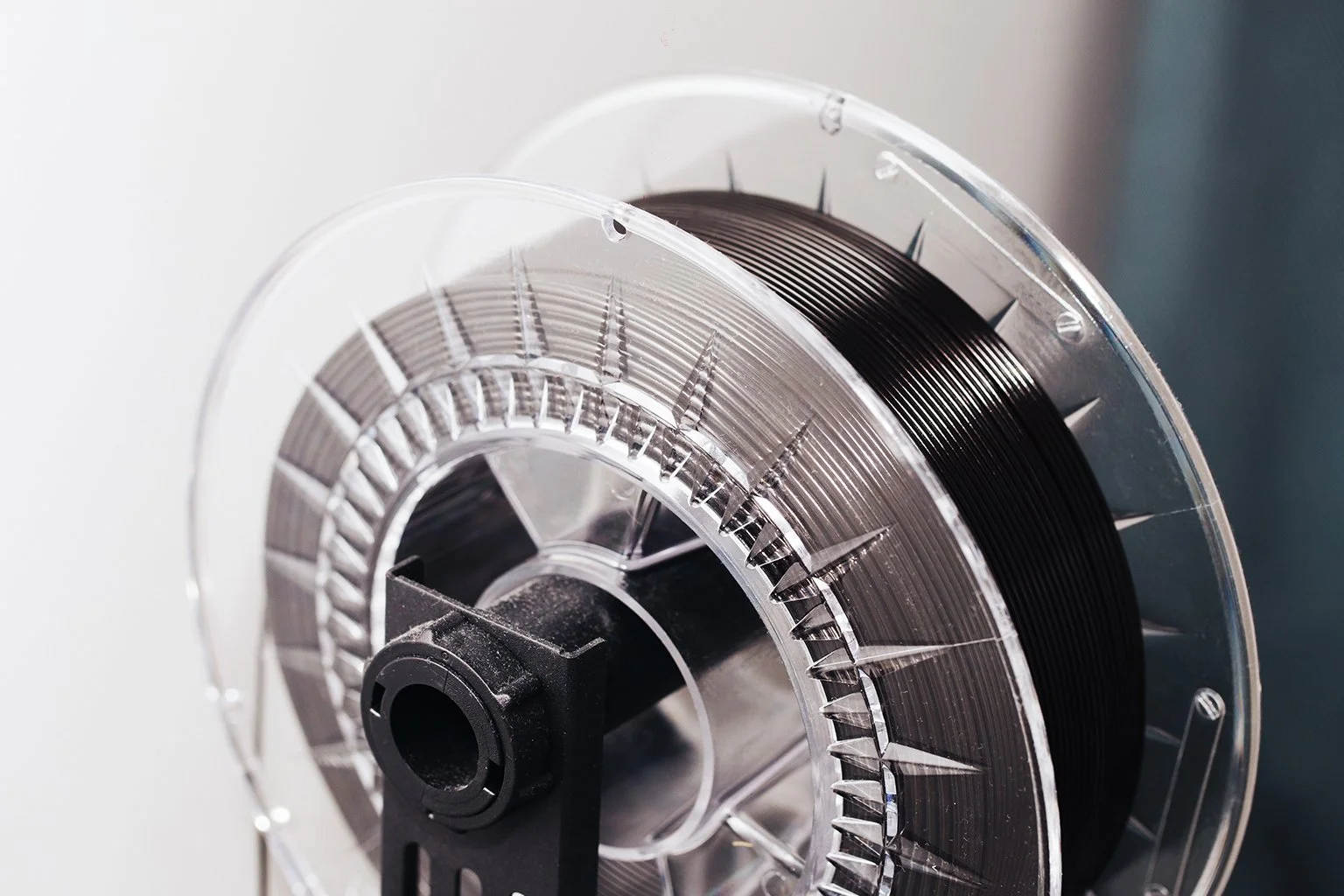
3D printing has moved well beyond the stage where it was seen mainly as a prototyping tool. Over the past decade, additive manufacturing has steadily become part of real production workflows across industries as varied as aerospace, healthcare, engineering, education and consumer products. Components that were once designed purely as test pieces are now being printed as functional parts expected to perform reliably in real-world conditions.
As this shift has taken place, new questions have begun to emerge around the materials used in additive manufacturing. When printed components are used in environments where they are handled frequently, exposed to moisture, or come into contact with biological material, hygiene and durability become important design considerations.
One of the more interesting developments in this area is the emergence of antimicrobial 3D printing filaments. These are polymer materials engineered with antimicrobial technologies intended to help reduce microbial growth on the surface of printed parts. While such technologies are not a replacement for cleaning or established hygiene practices, they represent a growing effort to integrate functional performance directly into additive manufacturing materials.
To understand why antimicrobial filaments are gaining attention, it helps to look more closely at how 3D printing works and how the structure of printed objects differs from parts made using traditional manufacturing techniques.
The evolution of additive manufacturing
3D printing, or additive manufacturing, refers to a group of technologies that create objects layer by layer using digital design files. Unlike traditional subtractive manufacturing methods, which remove material through cutting or machining, additive processes build components by depositing material precisely where it is needed.
This approach offers a number of advantages. Complex geometries can be produced without expensive tooling, customisation becomes easier, and material waste can be reduced. These benefits have made additive manufacturing increasingly attractive for industries where flexibility and rapid development are important.
Among the many additive manufacturing technologies available, fused deposition modelling (FDM) remains one of the most widely used for polymer parts. In an FDM printer, thermoplastic filament is heated and pushed through a nozzle, depositing thin strands of molten material that fuse together as they cool. By repeating this process layer by layer, the printer gradually builds the final object.
A range of polymer filaments are commonly used in this process, including materials such as PLA, ABS, PETG, nylon and flexible thermoplastic elastomers. Each of these materials brings different characteristics in terms of strength, flexibility, chemical resistance and printability.
As the technology has matured, the use of printed parts has expanded significantly. Hospitals now print anatomical models to assist surgical planning. Engineers use printed fixtures and jigs in manufacturing environments. Laboratories produce custom holders, adapters and experimental tools that would otherwise be expensive or slow to machine.
As additive manufacturing becomes more widely used in these settings, attention is increasingly turning to how printed materials perform outside the controlled environment of a workshop.
Why hygiene matters in 3D printed components
One characteristic that distinguishes many 3D printed parts from traditionally manufactured components is their layered surface structure. Even when printed with relatively fine resolutions, objects produced using FDM printers typically display microscopic layer lines created during the deposition process.
In most applications these surface features are extremely small and do not affect the function of the part. However, they can influence how surfaces interact with moisture, organic residues and microorganisms.
Surface texture plays an important role in microbial adhesion. Research in microbiology and materials science has shown that microorganisms often attach more easily to rough or irregular surfaces than to highly polished ones. Small surface features can create microscopic niches where bacteria are less easily removed by simple mechanical cleaning.
Over time, microbial communities can establish themselves on many types of materials if conditions such as moisture and nutrients are present. Biofilms — structured communities of microorganisms embedded within protective matrices — can develop on a wide variety of surfaces.
This does not mean that 3D printed parts are inherently unhygienic. In many environments they perform perfectly well. However, when printed components are used in areas such as healthcare facilities, laboratories, food preparation environments or public infrastructure, designers may begin to think more carefully about how materials behave in the presence of microbes.
Antimicrobial additives in polymer materials
Antimicrobial technologies have been incorporated into polymer products for decades. These technologies are widely used in materials found in healthcare equipment, building products, consumer goods and food storage containers.
In many cases, antimicrobial additives are designed to protect the material itself from microbial growth that could lead to degradation, staining or odour development. The technologies typically work by interfering with key microbial processes such as cell membrane function or enzyme activity.
Unlike surface coatings, which may wear away over time, antimicrobial additives are often integrated directly into the polymer during the manufacturing process. This means the antimicrobial function is embedded throughout the material rather than applied only to the surface.
This approach allows the technology to remain active throughout the life of the product, even as the surface experiences wear or abrasion.
How antimicrobial technology is incorporated into 3D printing filament
The development of antimicrobial filament follows a similar principle. During filament production, antimicrobial additives are incorporated into the polymer before the material is extruded into filament form.
The process usually begins with the preparation of a masterbatch containing the antimicrobial additive. This masterbatch is blended with the base polymer pellets, ensuring that the additive can be distributed evenly throughout the material.
The blended material is then fed into an extrusion system where it is melted and forced through a precision die to create the filament strand. Once cooled, the filament is wound onto spools ready for use in standard 3D printers.
One of the key technical challenges is ensuring that antimicrobial additives remain stable during both filament extrusion and the subsequent printing process. Temperatures in FDM printers can exceed 200°C depending on the material, meaning additives must maintain their integrity under these conditions.
Material developers must also ensure that antimicrobial additives do not negatively affect the printing behaviour of the filament. Consistent extrusion, layer adhesion and mechanical strength all remain critical for successful printing.
When properly engineered, antimicrobial filaments can be printed using standard FDM printers without requiring specialised equipment.
Where antimicrobial 3D printing materials are being used
As additive manufacturing continues to expand into functional applications, antimicrobial materials are being explored in a range of environments where hygiene considerations are relevant.
Healthcare is one area where additive manufacturing has already demonstrated significant value. Hospitals frequently require specialised tools, anatomical models, prosthetics and surgical guides that can be customised for individual procedures. Many of these items are handled repeatedly or used in clinical environments where contamination control is important.
In such contexts, antimicrobial materials may help reduce microbial growth on the surface of certain non-critical components between cleaning cycles. They are not intended to replace sterilisation or infection control procedures, but they may contribute to improved material durability in challenging environments.
Laboratories represent another setting where additive manufacturing has become increasingly useful. Researchers often require specialised fixtures, holders and experimental tools that can be produced quickly and adapted as experiments evolve. Printing these components locally can significantly reduce both cost and lead time.
Food preparation and processing environments also present potential applications. Custom guides, fixtures and machine components used in production lines can sometimes be produced using additive manufacturing. In these cases, materials designed to inhibit microbial growth may help support broader hygiene management practices.
Even in more everyday settings, antimicrobial materials may be considered for high-contact items such as handles, buttons or shared equipment used in public spaces.
Responsible use and regulatory considerations
As interest in antimicrobial technologies grows, it is important to communicate their role clearly and responsibly.
Antimicrobial materials are generally intended to protect the material itself from microbial growth that may cause degradation, staining or unpleasant odours. They are not medical treatments and they do not replace cleaning, disinfection or hygiene protocols.
Regulatory frameworks in many regions require antimicrobial claims to focus on product protection rather than health protection unless specific approvals have been obtained. Manufacturers therefore need to ensure that any claims made about antimicrobial materials are accurate, evidence-based and consistent with regulatory guidelines.
Responsible communication is particularly important as antimicrobial technologies become more widely integrated into everyday products.
The future of hygienic additive manufacturing
Additive manufacturing continues to evolve rapidly. As the technology becomes more widely used for functional components, innovation in materials will play an increasingly important role.
Researchers are already exploring filaments that combine antimicrobial technologies with other advanced properties such as improved thermal resistance, electrical conductivity and enhanced mechanical performance.
Surface finishing techniques are also improving, allowing printed parts to achieve smoother surfaces and better durability. Combined with functional materials, these advances may open the door to a new generation of printed products designed specifically for demanding environments.
More broadly, additive manufacturing encourages designers to rethink how products are made. When objects can be produced locally and customised easily, material performance becomes even more important.
Designing hygiene into materials from the outset reflects a wider shift toward performance-driven materials engineering. Antimicrobial filaments represent just one example of how additive manufacturing materials are evolving beyond simple printability.
As additive manufacturing continues to mature, it is likely that functional materials will become central to its future development. Antimicrobial technologies, advanced composites and sustainable polymers are all part of a broader movement toward smarter materials that address real-world challenges.
3D printing began as a way to create prototypes quickly. Today it is becoming a sophisticated manufacturing ecosystem. Within that ecosystem, materials will increasingly define what additive manufacturing can achieve.
Further Reading and Authoritative Sources
Ngo, T.D. et al. (2018). Additive manufacturing (3D printing): A review of materials, methods, applications and challenges. Composites Part B: Engineering, 143, 172–196. https://doi.org/10.1016/j.compositesb.2018.02.012
Turner, B.N. & Gold, S.A. (2015). A review of melt extrusion additive manufacturing processes: II. Materials, dimensional accuracy, and surface roughness. Rapid Prototyping Journal, 21(3), 250–261. https://doi.org/10.1108/RPJ-02-2013-0017
Gibson, I., Rosen, D.W. & Stucker, B. (2021). Additive Manufacturing Technologies (3rd ed.). Springer. https://doi.org/10.1007/978-3-030-56127-7
Vaezi, M., Seitz, H. & Yang, S. (2013). A review on 3D micro-additive manufacturing technologies. The International Journal of Advanced Manufacturing Technology, 67, 1721–1754. https://doi.org/10.1007/s00170-012-4605-2
Addmaster (2025), Antimicrobial Additives in 3D Printing Filaments. https://www.addmaster.co.uk/blog/antimicrobial-additives-in-3d-printing-filaments
ISO 22196:2011. Measurement of antibacterial activity on plastics and other non-porous surfaces. https://www.iso.org/standard/54431.html