How Geopolitics Is Reshaping the Global Materials Landscape
When geopolitical tensions rise, the most visible signals tend to appear in energy markets. Oil prices fluctuate, shipping routes come under pressure, and attention focuses on supply security. But the effects rarely stop at energy. They extend much further downstream, into the materials that underpin modern manufacturing such as plastics, coatings, fibres, metals and composites, often with consequences that unfold over longer time horizons.
Recent developments in the Middle East have once again highlighted how interconnected global material supply chains have become. For manufacturers and designers, the implications are not abstract. They are reflected in material availability, pricing volatility, lead times and, increasingly, in the strategic decisions that shape how products are designed and produced. What is becoming clear is that geopolitics is no longer a background variable. It is an active force shaping the material landscape.
The concentration of supply in a global system
To understand the scale of this influence, it is necessary to look at where many of the world’s materials originate. The Middle East plays a central role not only in crude oil production, but also in the petrochemical industry. Large volumes of polyethylene, polypropylene and other essential feedstocks are produced across the region, forming the basis of products used in everything from packaging and automotive systems to textiles and medical devices.
This concentration of production has been driven by access to low-cost feedstocks and large-scale infrastructure. Over time, it has enabled highly efficient global supply chains, where materials are produced in one region, processed in another and assembled elsewhere. However, this efficiency comes with a trade-off. When a significant proportion of global supply is tied to a relatively small geographic area, disruptions can have far-reaching effects.
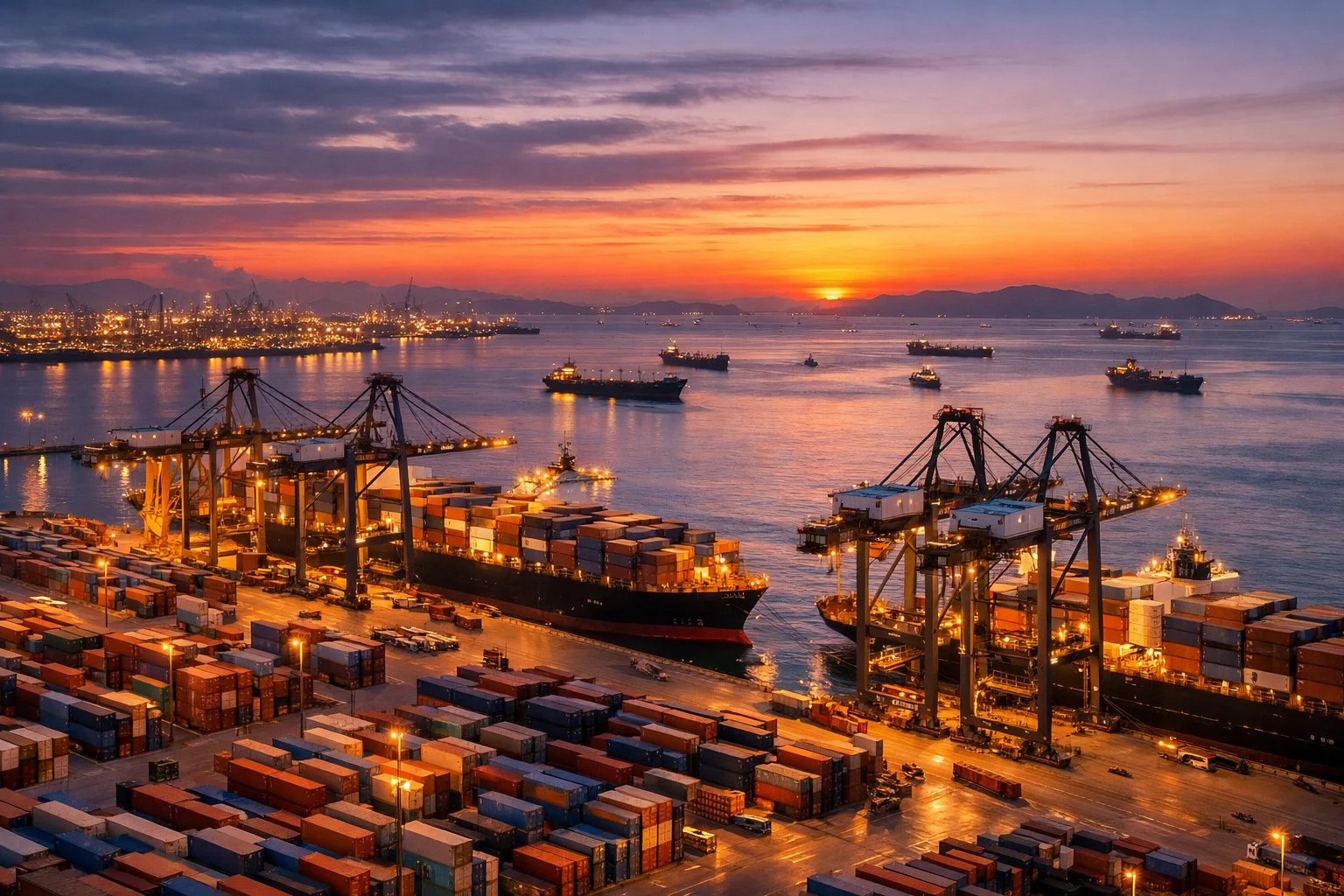
Shipping routes amplify this dependency. The Strait of Hormuz, for example, is one of the most critical chokepoints in global trade, carrying a substantial share of oil and petrochemical exports. Any disruption to this route can slow or restrict the movement of raw materials, creating bottlenecks that ripple across multiple industries. What appears as a regional issue can quickly become a global materials problem.
From disruption to downstream impact
When supply chains are interrupted, the effects are rarely confined to raw material producers. They move rapidly through value chains, affecting manufacturers, suppliers and end users alike. A disruption in polymer supply, for instance, can influence automotive production, where plastics are used extensively in interiors, electrical systems and lightweight components. In packaging, fluctuations in polyethylene and polypropylene pricing can impact everything from food packaging to industrial films.
These effects are often compounded by timing. Manufacturing systems are typically designed around predictable supply, with just-in-time delivery models minimising inventory. When disruptions occur, the lack of buffer can lead to delays, increased costs and, in some cases, production stoppages. Alternative materials may be sourced, but not always without compromise in performance or cost.
What emerges is a shift from stability to variability. Materials that were once readily available become constrained. Prices that were relatively stable become volatile. For manufacturers, this introduces a new layer of complexity, where supply risk becomes part of everyday decision-making.
Rethinking sourcing and material strategy
In response, many organisations are beginning to reassess how materials are sourced. The idea of regionalisation, producing materials closer to where they are used, is gaining traction. This does not necessarily mean abandoning global supply chains, but rather diversifying them to reduce reliance on single regions.
In some cases, this involves investing in domestic production capacity or strengthening regional supply networks. In others, it means building relationships with multiple suppliers to improve flexibility. The goal is not complete self-sufficiency, which is often impractical, but a more balanced approach that combines efficiency with resilience.
These shifts are already visible in different parts of the world. The United States has benefited from access to gas-based feedstocks, offering a degree of insulation from oil-driven volatility. Europe, by contrast, has faced greater challenges due to higher energy costs and reliance on external supply. Asia remains a major manufacturing hub but continues to depend heavily on imported raw materials.
As these dynamics evolve, material sourcing is becoming less about cost optimisation alone and more about risk management.
Innovation under constraint
Periods of disruption often act as catalysts for innovation, and the materials sector is no exception. When traditional supply routes become less reliable, manufacturers are forced to explore alternatives. This can lead to increased interest in recycled materials, bio-based polymers and hybrid material systems that offer similar performance with different supply characteristics.
Material efficiency also becomes a priority. Reducing the amount of material required for a given application can help offset both cost increases and supply constraints. This may involve redesigning components, optimising geometries or using advanced manufacturing techniques to achieve the same function with less material.
Additive manufacturing, or 3D printing, is one area where this shift is particularly visible. By enabling localised production and reducing reliance on complex supply chains, it offers a degree of flexibility that traditional manufacturing methods cannot always match. While it is not a universal solution, it represents a broader move toward more adaptable production systems.
At the same time, circular material strategies are gaining momentum. As virgin material supply becomes less predictable, the value of recovered and reused materials increases. Recycling, once driven primarily by environmental considerations, is now also being viewed through the lens of supply security.
Designing for resilience in a changing landscape
These changes are influencing how materials are selected at the design stage. Traditionally, decisions were based on factors such as strength, weight, cost and aesthetics. While these remain important, additional considerations are becoming more prominent.
Availability is one such factor. Materials that are technically ideal but difficult to source reliably may be reconsidered in favour of alternatives that offer greater stability. Geopolitical exposure is another emerging concern, with designers becoming more aware of where materials originate and how vulnerable those supply chains may be.
Lifecycle thinking is also playing a larger role. Materials that can be reused, recycled or sourced locally may offer advantages in a more uncertain environment. This reflects a broader shift toward designing not just for performance, but for resilience.
This does not imply a move away from high-performance materials. Rather, it suggests a more nuanced approach, where performance is considered alongside reliability of supply and long-term sustainability.
A more interconnected future
The global materials landscape is becoming increasingly complex. Supply chains that once appeared stable are now influenced by a wider range of factors, from geopolitical tensions to energy transitions and environmental regulations. For those working in materials and manufacturing, this complexity requires a more integrated perspective.
Materials are no longer just inputs in a production process. They are part of a broader system shaped by geography, economics and politics. Understanding how that system behaves, particularly under stress, is becoming an essential part of effective design and manufacturing.
The events unfolding in the Middle East are one example of how quickly conditions can change. But the underlying lesson extends far beyond any single region. In an interconnected world, local disruptions can have global consequences.
Material performance will always remain important. But increasingly, so too will material resilience, the ability to adapt, source and respond in a changing environment. For manufacturers, designers and engineers, that shift represents not just a challenge, but an opportunity to rethink how materials are chosen and used.
Further Reading
Khan, K. (2025). How do supply chain and geopolitical risks threaten energy security? Energy, 316, 134501.
https://doi.org/10.1016/j.energy.2025.134501Bednarski, L. (2025). Geopolitical disruptions in global supply chains: a state-of-the-art review. Production Planning & Control.
https://doi.org/10.1080/09537287.2023.2286283International Renewable Energy Agency (IRENA). (2023). Geopolitics of the Energy Transition: Critical Materials.
https://www.irena.org/Digital-Report/Geopolitics-of-the-Energy-Transition-Critical-MaterialsOverseas Development Institute (ODI). (2026). Critical minerals geopolitics in 2026: risks, supply chains and global power shifts.
https://odi.org/en/insights/critical-minerals-geopolitics-in-2026-risks-supply-chains-and-global-power-shifts/European Commission. (2024). The geopolitics of supply chains: securing critical raw materials.
https://onlinelibrary.wiley.com/doi/10.1111/1758-5899.13388